Quality Management System (QMS) documentation is a structured set of documents that define, control, and demonstrate an organization’s quality management system. The main purpose of QMS documentation is to communicate quality-related processes, preserve organizational knowledge, and support audits by providing objective evidence of conformity.
QMS documentation is organized in a hierarchical structure known as the QMS documentation pyramid, comprising five levels, including quality policy, quality manual, procedures (SOPs), work instructions, and records.
In life science companies, QMS documentation is critical due to stringent regulatory and industry requirements. Requirements such as ISO 9001:2015, ISO 13485:2016, FDA 21 CFR Part 210, 211, and 820, EU GMP, EU MDR, EU IVDR, and ICH guidelines define the documents that shall be included in the QMS.
Best practices for QMS documentation include implementing strict document control, using a logical hierarchy, maintaining consistent formats, assigning clear responsibilities, ensuring accessibility, and integrating regular reviews. QMS documentation should mirror actual processes and be integrated into daily operations for relevance and usability.
SimplerQMS is a cloud-based electronic QMS (eQMS) platform tailored to life science companies. SimplerQMS centralizes document control and integrates all key quality management processes, supporting compliance with life science requirements. SimplerQMS features like version control, role-based access, audit trails, and standardized workflows help organizations maintain up-to-date, inspection-ready documentation while minimizing manual workload.
What is Quality Management System (QMS) Documentation?
Quality management system documentation is a collection of documents that define the structure, processes, responsibilities, and controls of an organization’s quality management system. QMS documentation serves as tangible evidence of the organization’s commitment to quality and compliance.
The main purpose of QMS documentation is to communicate information across the organization and to preserve organizational knowledge by maintaining written instructions and records. QMS documentation promotes consistency and standardization in how processes are performed and provides objective evidence of conformity to internal and external requirements, supporting audits and inspections.
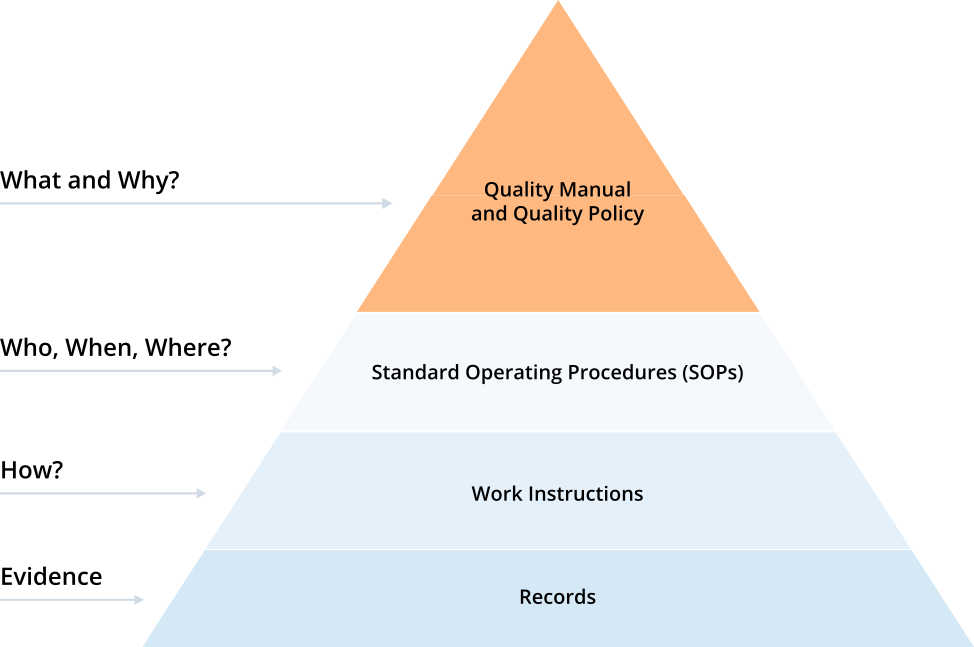
Typical documents within a QMS include quality policies and manuals, Standard Operating Procedures (SOPs), work instructions, and records. Quality policy and quality manual describe why the QMS exists and what its objectives are. SOPs define who performs specific quality-related activities, when and where they occur, and under what conditions. Work instructions and process descriptions serve as detailed “how-to” guides for performing tasks. Records function as evidence showing that higher-level documents have been followed.
QMS documentation is often represented through the QMS documentation pyramid, or QMS pyramid. The QMS documentation pyramid usually contains four to five hierarchical levels of documents, from top-level policies to detailed records, illustrating how strategic quality goals translate into operational actions.
The decision on which documents to include in a QMS depends on the organization’s scope, regulatory requirements, and industry standards. The quality management team, process owners, and top management determine the documentation structure and scope. Process owners usually draft the documents, department managers and quality assurance review them, and final approval is provided by the quality head and operational director.
What is QMS Documentation Structure?
The QMS documentation structure defines how all quality management documents are organized and interrelated within an organization. The QMS documentation structure follows a hierarchical model known as the QMS documentation pyramid, where each level builds upon the one above it. The QMS documentation hierarchy includes quality policy, quality manual, procedures, work instructions, and records and forms.
The purpose of structuring QMS documentation is to create a logical, consistent, and easily navigable framework that supports compliance and operational efficiency. A well-defined documentation structure provides a clear framework, allowing top-level policies to guide everyday operations effectively. Structured QMS documentation facilitates effective training by establishing a common foundation for learning. QMS hierarchy improves efficiency by enabling quicker access to documents, reducing the time spent searching for information. Finally, well-structured QMS documentation supports successful audits by providing well-organized and easily retrievable documents.
The different levels of QMS documentation structure are listed below.
- Quality Policy: Quality policy is the highest-level document of a QMS that defines the organization’s overall commitment to quality, guiding principles, and strategic direction.
- Quality Manual: The quality manual describes the structure and scope of the QMS, outlining how processes interact and comply with applicable requirements.
- Procedures: Procedures define a standardized way of performing key processes, specifying responsibilities and steps to ensure consistent execution.
- Work Instructions: Work instructions provide detailed, task-specific directions that describe exactly how individual operations or activities are to be carried out.
- Records and Forms: Records and forms serve as evidence that processes have been performed and requirements met, capturing data and results.
The levels of documents in the QMS documentation pyramid – quality policy, quality manual, procedures, work instructions, and records – are shown below.
Quality Policy
Quality policy is a formal, documented statement established, implemented, and maintained by an organization’s top management.
Quality policy forms the highest level of the QMS documentation structure and defines the organization’s overall intentions and direction regarding quality. Quality policy provides the foundation upon which the entire QMS is built.
The quality policy must be appropriate to the organization’s purpose and context and support its strategic direction.
The key elements that should be included in a quality policy are the following.
- A Commitment to Meet Applicable Requirements: Quality policy should state management’s responsibility to comply with regulatory, statutory, and customer requirements relevant to the organization’s operations.
- A Commitment to Continual Improvement: Quality policy must reflect dedication to continuously enhancing the effectiveness of the QMS and improving product or service quality.
- Framework for Quality Objectives: Quality policy should establish a basis for setting measurable quality objectives that align with organizational goals and performance expectations.
The quality policy should be communicated, understood, and applied throughout the organization. Quality policy must be available to interested parties, regularly reviewed for continued effectiveness, and maintained as documented information within the QMS.
Quality Manual
A quality manual is a high-level document that outlines the structure and description of an organization’s QMS. The quality manual is the second level of the QMS documentation structure.
The purpose of a quality manual within the QMS documentation structure is to serve as the central point of reference for the entire QMS. The quality manual is often reviewed during audits and serves as a primary piece of evidence for customers, auditors, and regulatory inspectors to verify that the organization maintains a consistent and compliant QMS.
The main components of a quality manual are given below.
- QMS Scope: The quality manual describes the boundaries of the QMS, specifying activities, sites, and products or services covered, along with any justified exclusions.
- Quality Policy: Quality manual references the organization’s quality policy, linking top management’s commitment to quality with the QMS.
- Quality Objectives: The quality manual establishes quality objectives as measurable goals supporting the organization’s strategic direction and continual improvement efforts.
- Documented Processes and Their Interactions: Quality manual includes the main processes of the QMS, maps how they interact to achieve quality objectives, and describes the organization’s documentation hierarchy.
- Roles and Responsibilities: In the quality manual, the roles, authorities, and responsibilities of personnel involved in establishing, maintaining, and improving the QMS are defined.
Procedures
Procedures or Standard Operating Procedures (SOPs) are formal, documented sets of instructions that describe the necessary steps and specify responsibilities for performing key business or QMS processes consistently to achieve a desired outcome. SOPs represent the third level of documents in the QMS documentation hierarchy. SOPs define how activities should be carried out, by whom, and in what sequence, ensuring that all tasks are completed according to established requirements.
The primary purpose of QMS procedures is to ensure consistency and standardization. By defining a uniform method for performing a process, SOPs reduce variation and ensure that results remain consistent regardless of who performs the task or when it is done. SOPs provide a basis for training and auditing, allowing employees to learn correct practices and enabling auditors to verify that activities are performed as defined.
The core elements of QMS procedures are listed below.
- Purpose: SOP’s purpose explains why the procedure exists and what it aims to achieve.
- Scope: SOP’s scope defines where and to what extent the procedure applies, including applicable departments or processes.
- Responsibilities: The responsibilities of the roles responsible for executing and maintaining the procedure are defined.
- Procedure Steps: The procedure steps provide a detailed, step-by-step description of how the activity is to be performed.
- Documents/Records: In the documents and records section, the forms, checklists, or logs used to document actions or outcomes are listed.
- Related Procedures/Related Documents/References: The related procedures, related documents, or reference section refers to other procedures, policies, or requirements relevant to the activity.
- Definitions: In definitions, the key terms or abbreviations used within the procedure are clarified for uniform understanding.
Work Instructions
Work instructions are detailed, task-specific documents that provide a precise sequence of actions for an individual or specific role to correctly and safely perform a single activity or operation. Work instructions represent the fourth level in the QMS documentation pyramid.
The purpose of work instructions is to translate higher-level procedures into actionable, clear tasks that can be performed consistently. Work instructions provide the level of operational detail necessary when procedures alone are not sufficient to guide employees fully. By specifying step-by-step instructions, work instructions ensure repeatability, minimize human error, and maintain product or process quality across operations.
Work instructions follow a format similar to Standard Operating Procedures (SOPs).
The core components of a work instruction are the following.
- Purpose: In the purpose section, the objective of the work instruction is stated, and what activity it governs.
- Scope: The scope defines where, when, and to which roles or equipment the instruction applies.
- Responsibilities: The responsibilities specify who is responsible for performing and verifying the task.
- Required Tools, Equipment, and Materials: In the required tools, equipment, and materials section, all necessary resources to perform the activity correctly and safely are listed.
- Safety Warnings and Precautions: The safety warnings and precautions section highlights any safety measures, hazards, or personal protective equipment (PPE) requirements.
- Step-by-Step Instructions: Step-by-step instructions sections provide detailed, sequential steps to execute the activity, including process controls, acceptance criteria, and specification limits.
- Documents/Records: In the documents or records section, any forms, logs, or reports required to record task completion are identified.
- Related Procedures: The related procedures section references higher-level procedures that provide context or additional guidance.
- Definitions: In definitions, specific terms or abbreviations used within the instruction are explained for clarity and consistency.
Records and Forms
Records and forms in a quality management system are documents that provide direct evidence of activities performed or results achieved. Records and forms are at the fifth level of the QMS documentation hierarchy. Records and forms serve as proof that processes have been followed, requirements have been met, and products conform to defined specifications.
The primary function of records and forms within QMS documentation is to provide verifiable, objective evidence that operations have been conducted appropriately and that quality and compliance requirements have been maintained.
Examples of common QMS records and forms are listed below.
- Training Records: Training records document employee participation in required training, confirming competence to perform specific tasks.
- Calibration Records: Calibration records provide evidence that equipment has been calibrated within defined intervals to maintain accuracy.
- Analysis Certificates: Analysis certificates detail the results of quality control tests performed on a specific batch of a product or raw material.
- Non-Conformance Reports (NCRs): Non-conformance reports record deviations or failures to meet defined requirements.
- Corrective and Preventive Action (CAPA) Forms: CAPA forms capture the resolution of non-conformances or undesirable events observed.
What Is the Difference Between Records and Other Quality Documents in QMS?
The main difference between records and other quality documents in QMS is that records provide evidence that an activity was performed or that results were obtained, and once created, they are not altered. Any corrections to the records must be made in a controlled manner to preserve the integrity and traceability of the original record. Other quality documents, such as procedures or work instructions, guide how to perform activities and may be revised periodically as processes evolve.
Are Quality Control Documents Part of QMS Documentation?
Yes, Quality Control (QC) documents, such as certificates of analysis, specifications, and methods of analysis, are part of QMS documentation. Quality control is the process of verifying that products, services, or processes meet defined quality requirements. QC documentation provides the records and instructions necessary for monitoring and measuring product or process quality.
QC procedures are defined within a company’s SOPs, representing the procedural level in the QMS hierarchy. For example, a sample handling procedure is a QC-specific SOP. More detailed, task-oriented instructions and records for quality control exist within the lower levels of the QMS documentation pyramid.
Some of the common types of QC documents included in QMS documentation are given below.
- Certificates of Analysis (CoA): CoAs provide documented verification that a product or material meets defined specifications based on test results.
- Analytical Method Validation Protocols and Reports: Analytical method validation protocols and reports establish and document that analytical methods are suitable for their intended purpose and consistently produce reliable results.
- Specifications: Specifications define the required parameters and acceptance criteria that products or materials must meet.
- Methods of Analysis: Methods of analysis describe the analytical techniques used to test materials or products; Methods of analysis may exist in a QMS as detailed work instructions.
- Incoming Samples Log: The incoming samples log records details of samples received for testing, including sample identification, date of receipt, source, and the name and signature of the person who received the sample.
- Analytical Instrument Calibration Certificates: Calibration certificates provide evidence that laboratory instruments have been calibrated and are operating within defined accuracy limits.
Are All Operational Documents Part of QMS Documentation?
No, not all operational documents are part of QMS documentation. Only those operational documents that define, describe, or support processes impacting product or service quality are included in the QMS.
Examples of operational documents included in QMS documentation are listed below.
- Manufacturing Instructions: Manufacturing instructions describe how a product is manufactured, including process parameters and controls.
- Temperature Logs During Transportation: Temperature logs record temperature conditions to verify that materials or products were maintained within specified limits during shipment.
- Audit Reports: Audit reports document the results of internal or external quality audits, identifying findings, non-conformities, and corrective actions.
- Maintenance Records: Maintenance records provide evidence that production or testing equipment has been properly maintained.
Operational documents are not included in the QMS documentation if they are used solely for business administration, do not directly affect product or service quality, and are not mandated by regulatory requirements or quality standards.
Examples of operational documents not included in QMS documentation are given below.
- Meeting Minutes: Internal records of general discussions or planning unrelated to quality processes.
- Administrative E-mails: Routine correspondence not linked to quality system activities.
- Financial Reports: Accounting or budgeting documents that do not influence product or service conformity.
What Are the QMS Documentation Requirements?
QMS documentation requirements define what documents an organization must establish, maintain, and control to demonstrate the quality of the product or service, the effectiveness of its QMS, and its compliance with the requirements.
QMS documentation requirements are primarily established by ISO 9001:2015, which specifies the minimum documentation needed to ensure that a QMS is effectively implemented, controlled, and continuously improved. According to ISO 9001:2015, QMS documentation includes two categories of documented information, including documented information required by the standard and documented information determined by the organization as necessary for QMS effectiveness.
Documents required within a QMS, according to ISO 9001, include the following.
- Quality Policy: Quality policy is a formal statement from top management expressing the organization’s commitment to quality.
- QMS and Processes: QMS and processes describe the scope of the QMS and the interaction of processes in the system.
- Quality Objectives: Quality objectives are measurable goals aligned with the quality policy to monitor performance and drive improvement.
- Personnel Competence Records: Competence records are evidence of employee qualifications, training, and competence relevant to assigned responsibilities.
- Monitoring, Measurement, and Calibration Results: Monitoring, measurement, and calibration results are records of inspections, tests, and equipment calibrations verifying process and product conformity.
- Process and Controls Records: Process and control records document process execution and operational controls applied to ensure product or service quality and consistency.
- Product or Service Documentation: Product or service documentation is the set of defined customer, regulatory, and internal requirements for the product or service.
- Design and Development Records: Design and development records document design and development inputs, outputs, controls, and changes.
- External Providers Evaluation Documentation: External providers’ evaluation documentation includes records of supplier evaluations, qualifications, and monitoring activities.
- Production and Service Provision Records: Production and Service Provision records provide evidence of conformity to requirements and enable traceability throughout production and service delivery.
- Product Release Records: Product release records provide evidence that the final product conforms with the predefined specifications and that the quality requirements have been fulfilled. The release documentation shall include traceability to the person who authorized the release.
- Nonconformity and CAPA Records: Nonconformity and CAPA records document detected nonconformities and any corrective and preventive actions taken.
- Metrics Records: Metrics records are data and reports used to evaluate QMS performance using specific indicators.
- Internal Audit Records: Internal audit records provide evidence of internal audits, including audit plans, findings, and corrective actions.
- Management Review Records: Management review records are the outputs from management reviews, demonstrating oversight of the QMS performance and improvement actions.
- Change Records: Change records document process, product, or system changes.
The exact documents that a company must maintain depend on its industry, regulatory, and customer requirements.
For life science companies, such as pharmaceutical and medical device manufacturers, QMS documentation requirements extend beyond ISO 9001:2015. Medical device companies may need to comply with FDA 21 CFR Parts 820, EU MDR, EU IVDR, and ISO 13485:2016, depending on the desired market access. Pharmaceutical companies may need to comply with FDA 21 CFR Part 210, 211, or EU-GMP. In highly regulated industries, comprehensive documentation is critical not only for operational control but also for demonstrating compliance during regulatory inspections and product approvals.
What Are the Key QMS Documentation Requirements for Pharmaceutical Companies?
Key QMS documentation requirements for pharmaceutical companies are defined by regulatory frameworks such as EU GMP and FDA 21 CFR Part 211, as well as ICH Q9 and ICH Q10.
The main documentation requirements for a pharmaceutical quality management system include the following.
- Site Master File (SMF): SMF is a high-level document required under EU GMP Part I, Chapter 4, and Part III (GMP-related documents) providing an overview of the company’s quality system and operations.
- Quality Manual: Quality manual is required by EU GMP Chapter 1 and ICH Q10.
- Standard Operating Procedures: SOPs are required by EU GMP Chapter 1 and Chapter 4 and FDA 21 CFR Part 211 to define consistent process execution across operations. The Quality Control department must review and approve all procedures related to production, process control, and release.
- Validation Master Plan (VMP) and Validation Documentation: VMP and validation documentation are required under EU GMP Annex 15 and FDA 21 CFR Part 211 to describe the validation strategy and provide documented evidence of process, system (including facilities, utilities, and equipment), method, and cleaning validation.
- Common Technical Document (CTD): CTD is recommended by ICH guidelines to present product registration information to health authorities.
- Specifications and Analytical Methods: Specifications and corresponding analytical methods are required by EU GMP Chapters 4 and 6 and FDA 21 CFR Part 211 to define acceptance criteria and analytical procedures for materials, intermediates, and finished products. Specifications and analytical methods must be reviewed and approved by QC.
- Master Batch Records and Executed Batch Records: Master batch records and executed batch records are required by EU GMP Chapters 1, 4, 5, and 6 and FDA 21 CFR Part 211 to provide the approved instructions and documented evidence of the production and control of each manufactured batch. QC must review and approve batch records prior to batch release.
- Protocols and Reports: Protocols and reports are required for multiple activities within the pharmaceutical industry, as outlined in EU GMP Chapter 4. For example, validation protocols and reports for medicinal products supplied in the EU shall follow EU GMP Annex 15.
- Deviation Records: Deviation records are required by EU GMP and FDA Part 211 to document and investigate deviations from approved instructions or specifications.
- Change Control Records: Change control records are defined in EU GMP Chapter 1, FDA Part 211, and ICH Q10, documenting evaluation, approval, and implementation of changes affecting product quality.
- Corrective and Preventive Action (CAPA) Records: CAPA records are required by EU GMP Chapter 1 and ICH Q10 to capture corrective and preventive actions raised either as a response to a non-conformity or in the context of continuous improvement.
- Complaint Records: Complaint records are defined in EU GMP Chapter 8 and FDA Part 211, requiring documentation and investigation of product complaints, as well as corrective actions if needed.
- Training Records: Training records are required by EU GMP Chapter 2 and FDA Part 211 as proof of personnel qualification.
- Supplier Qualification Records: Supplier qualification records, as required under EU GMP Chapters 1 and 7 and ICH Q10, document the evaluation, approval, and ongoing monitoring of suppliers.
- Release Records (Certificates of Analysis and Certificates of Conformity): Release records are required under EU GMP Annex 16 and FDA Part 211 as documented evidence of activities related to product release.
- Qualification, Calibration, Maintenance, and Cleaning Records: Qualification, calibration, maintenance, and cleaning records are required by EU GMP Chapter 3 and Annex 15 and FDA Part 211 to demonstrate that equipment and facilities remain in suitable condition.
- Risk Assessments: Required by ICH Q9 and EU GMP Chapter 1 to identify, evaluate, and mitigate potential risks to product quality.
- Product Quality Review (PQR): Required under EU GMP Chapter 1 and FDA Part 211 to periodically evaluate product consistency, process performance, and improvement opportunities.
- Audit Reports: Required by EU GMP Chapter 7 and Chapter 9 to document internal and supplier audits, findings, and follow-up actions.
- Management Review Records: Defined in ICH Q10, documenting management’s periodic review of QMS performance, resource needs, and improvement actions.
- Distribution, Storage, and Stability Records: Distribution, storage, and stability records are required by FDA Part 211 and EU GMP Chapter 6 to document the correct handling, storage, and distribution of the product, and compliance with shelf-life specifications.
Documentation requirements in the pharmaceutical industry ensure that manufacturers maintain full control over all processes affecting product quality and patient safety. Documentation requirements are derived from GMP requirements, as well as international guidelines like ICH guidelines, that together establish a comprehensive quality framework supporting regulatory compliance and continuous improvement.
What Are the Key QMS Documentation Requirements for Medical Device Companies?
QMS documentation requirements for medical device companies are established by FDA 21 CFR Part 820 (Quality Management System Regulation), EU MDR (Medical Device Regulation), and EU IVDR (In Vitro Diagnostic Regulation), as well as ISO 13485:2016 and ISO 14971:2019.
Key documentation requirements for a medical device quality management system are listed below.
- Quality Policy and Quality Objectives: Quality Policy and quality objectives are required by ISO 13485:2016 and expected within the QMS requirements of EU MDR and EU IVDR.
- Quality Manual: A quality manual is mandated by ISO 13485 and can be used to meet the requirement for a documented Quality Management System in EU MDR and EU IVDR.
- Standard Operating Procedures (SOPs): SOPs or documented procedures are required under ISO 13485:2016, EU MDR, and EU IVDR.
- Validation Records: Validation records covering both process validation and design validation are required by ISO 13485:2016, EU MDR, and EU IVDR.
- Medical Device File: A medical device file is required by ISO 13485, containing general information for the medical device, intended use/purpose, labeling, and instructions for use. The medical device file contains procedures and specifications for manufacturing, packaging, storage, handling, distribution, and measuring and monitoring. EU MDR and EU IVDR refer to the medical device file as technical documentation. The medical device file was formerly referred to as the Device Master Record (DMR) under FDA 21 CFR Part 820.
- Manufacturing Records: ISO 13485, EU MDR, and EU IVDR require manufacturing records providing complete traceability of each device batch, the amount manufactured, and the amount approved for distribution. The manufacturing and traceability records were formerly referred to as the Device History Record (DHR) under FDA 21 CFR Part 820.
- Design and Development File: A design and development file is required by ISO 13485 and EU MDR/IVDR to demonstrate compliance throughout the design and development stages. The design and development file was formerly referred to as the Device History File (DHF) under FDA 21 CFR Part 820.
- Risk Management File: A risk management file is required by ISO 14971, and risk management documentation is incorporated into technical documentation as referenced in EU MDR and EU IVDR, documenting risk analysis, evaluation, control, and post-market surveillance feedback.
- Nonconformity Records: Nonconformity records are required by ISO 13485:2016, and expected under EU MDR and EU IVDR as part of the QMS, documenting any deviations or nonconformities from specified requirements and the actions taken to address them.
- Change Records: Change records are required under ISO 13485:2016, and expected under EU MDR and EU IVDR, providing documented control of design or process changes to ensure traceability, impact assessment, and continued compliance.
- Corrective and Preventive Action (CAPA) Records: CAPA records are required by ISO 13485:2016, EU MDR, and EU IVDR, documenting actions to address or prevent quality issues or improve current practices.
- Training Records: Training records are required under ISO 13485:2016 to verify that employees are trained and competent to perform assigned tasks.
- Supplier Qualification Records: Supplier qualification records are required by ISO 13485:2016, EU MDR, and EU IVDR, documenting supplier evaluation, approval, and ongoing monitoring to ensure material or service quality.
- Inspection, Testing, Calibration, and Maintenance Records: Inspection, testing, calibration, and maintenance records are required under ISO 13485:2016, and expected under EU MDR and EU IVDR, providing evidence that components and finished devices meet predefined specifications and that equipment operates within acceptance limits.
- Identification, Traceability, Labeling Records: Identification, traceability, and labeling records are required under FDA 21 CFR Part 820, ISO 13485:2016, EU MDR, and EU IVDR, to preserve accurate identification of each medical device from manufacturing to the market.
- Distribution and Storage Records: Distribution and storage records are required by ISO 13485:2016, EU MDR, and EU IVDR to provide evidence of correct handling of the devices during storage and distribution activities.
- Audit Reports: Audit reports are required by ISO 13485:2016, and expected under EU MDR and EU IVDR, documenting results of internal and external audits and corrective actions taken.
- Management Review Records: Management review records are required under ISO 13485:2016, documenting top management’s periodic assessment of QMS effectiveness and opportunities for improvement.
- Post-Market Surveillance Records: Post-market surveillance records are required by FDA 21 CFR Part 820, ISO 13485:2016, EU MDR, and EU IVDR, documenting ongoing monitoring of device safety and performance, including complaints, adverse events, and any corrective actions taken once the device is on the market.
Medical device documentation requirements ensure full lifecycle traceability, from design and production to post-market monitoring, supporting product safety, regulatory compliance, and continuous improvement.
What Are the Key Requirements for Controlling QMS Documentation?
According to ISO 9001:2015, documented information must be available and suitable for use where and when needed and adequately protected.
The key requirements for controlling QMS documentation are the following.
- Distribution, Access, Retrieval, and Use Control: Documentation must be easily accessible to authorized personnel and protected from unauthorized access or misuse.
- Storage and Preservation: QMS documentation must be stored securely under appropriate conditions to prevent loss, damage, or deterioration.
- Control of Changes: Any changes or updates must be authorized, ensuring traceability of revisions to maintain document integrity.
- Retention and Disposition: QMS documentation must be retained for defined periods according to regulatory or organizational requirements and properly disposed of when no longer needed.
All QMS records and forms should adhere to ALCOA+ principles. Documents shall be Attributable, Legible, Contemporaneous, Original, Accurate, Complete, Consistent, Enduring, and Available to ensure data integrity and reliability.
What Are the Best Practices for QMS Documentation?
The best practices for managing QMS documentation are the following.
- Implement Rigorous Document Control: Implement document control to manage document creation, review, approval, distribution, and revision. Ensure only the latest, approved versions are accessible and maintain a history of all changes.
- Conduct Regular Reviews and Updates: Review QMS documents periodically to ensure they remain current, relevant, and compliant with applicable requirements. Update documents promptly when processes or requirements change.
- Establish a Clear and Logical Document Hierarchy: Organize documents according to the QMS documentation pyramid to provide a structured, easy-to-navigate framework.
- Use Simple and Concise Language: Write documents clearly and avoid unnecessary complexity. Simple, direct language helps employees understand and correctly apply procedures without ambiguity.
- Maintain a Consistent Format: Standardize document templates, numbering systems, and terminology. Consistency improves readability, reduces confusion, and strengthens the organization’s quality culture.
- Define Clear Roles and Responsibilities: Assign responsibility for document creation, review, approval, and maintenance to specific roles to ensure accountability and prevent uncontrolled changes.
- Ensure Easy Accessibility: Store physical documents in secure, organized locations with controlled access. Electronic document management solutions can provide role-based access, version control, and audit trails, ensuring data integrity and security.
- Provide Tailored Training: Train employees on how to access, use, and maintain QMS documentation. Ensure understanding of document control procedures and compliance obligations.
- Audit Documentation: Perform regular internal audits to verify document control compliance, identify gaps in good documentation practices, and ensure records are properly maintained and traceable.
How to Ensure Effective QMS Documentation?
To ensure effective QMS documentation, the following key steps should be followed.
- Map Core Business Processes: Identify and document the key processes that impact product or service quality. Understanding process interactions helps determine where documentation is required to ensure control and traceability.
- Define Documentation Requirements: Determine which documents are necessary based on applicable requirements and internal needs. Define the level of detail required for policies, procedures, and records to maintain compliance and clarity.
- Develop Documentation that Mirrors Actual Processes: Create documents that accurately reflect how work is performed in practice. Aligning written procedures with real operations improves usability and ensures compliance during audits.
- Establish Document Control: Implement a robust control system for creating, approving, revising, and archiving documents. Controlled documentation prevents errors, ensures only current versions are in use, and maintains traceability.
- Connect Documents to Daily Operations: Integrate QMS documentation into routine workflows so that employees regularly refer to and apply approved procedures and records in their daily tasks.
- Train Personnel: Provide structured training on the use, interpretation, and management of QMS documents. Training ensures that all personnel understand their responsibilities and follow documented processes correctly.
- Foster Accountability: Assign clear ownership for each document type and require signing for approvals, reviews, and updates. Accountability ensures responsibility for maintaining documentation accuracy and relevance over time.
How to Ensure Continuous Improvement in the QMS Documentation?
To ensure continuous improvement in the QMS documentation, the steps below shall be followed.
- Implement a PDCA Cycle: Apply the Plan-Do-Check-Act approach to continuously evaluate and refine QMS documents. This structured cycle promotes ongoing assessment and improvement of documentation effectiveness.
- Define a Review Schedule: Establish periodic review timelines for all QMS documents to ensure they remain current, compliant, and reflective of actual practices. Higher-level documents like the Quality Policy are reviewed less frequently, while operational documents require more regular review. Standard Operating Procedures (SOPs) are generally reviewed on a defined cycle, such as annually or every 2-3 years, based on risk and organizational needs. Work instructions are revised whenever process changes occur. Forms are typically updated frequently, as needed.
- Use Audits for Improvement: Use internal and external audits to identify documentation gaps, inconsistencies, or areas for enhancement. Audit findings provide actionable input for revising and strengthening QMS documentation.
- Leverage Existing QMS Data: Analyze data from CAPAs, non-conformances, and performance metrics to determine where documentation updates are needed to prevent recurring issues.
- Empower Employee Feedback: Encourage employees to suggest improvements to procedures and work instructions. Direct input from process users enhances document accuracy and usability.
- Establish Documentation Metrics: Track performance indicators such as document revision frequency, approval cycle time, and nonconformities linked to documentation errors. Metrics help measure and drive improvement efforts.
- Leverage Technology: Use electronic QMS solutions to automate version control, streamline reviews, and ensure traceability. Digital tools support faster updates and maintain consistency across all documentation levels.
What Are the Benefits of Well-Implemented QMS Documentation?
The main benefits of well-implemented QMS documentation are given below.
- Demonstrable Compliance: Well-implemented QMS documentation provides verifiable evidence that the organization meets regulatory, customer, or standard requirements, facilitating smooth audits and inspections.
- Enhanced Consistency and Reduced Errors: Standardized processes and clearly defined procedures minimize variability and human error in operations.
- Increased Efficiency and Productivity: Centralized, well-organized documentation enables employees to find accurate information quickly, reducing delays and redundant work.
- Informed Decision-Making: Reliable data and documented records support evidence-based decisions, enabling management to identify trends and implement improvements effectively.
- Effective Knowledge Management: QMS documentation captures institutional knowledge in a structured manner, ensuring continuity and preventing information loss during personnel changes.
- Effective Training and Onboarding: QMS documentation serves as a foundation for structured training programs, helping new and existing employees understand quality requirements and perform tasks correctly.
- Clarified Roles and Responsibilities: A well-implemented documentation clearly states who is responsible for each activity, promoting accountability and reducing ambiguity in task execution.
- Enhanced Communication and Collaboration: QMS documentation provides a common reference point that aligns teams across departments, improving coordination and information sharing.
- Improved Supplier and Customer Confidence: Well-implemented QMS documentation demonstrates organizational control and reliability, reinforcing trust among regulatory authorities, suppliers, and customers.
What Is the Role of QMS Software in Managing Quality Documentation?
QMS software is a digital solution designed to manage, control, and maintain all documents and processes within a quality management system. QMS software replaces manual, paper-based systems with a centralized platform that supports document control, traceability, and compliance across the organization.
The purpose of using QMS software for documentation management is to streamline the creation, approval, distribution, and maintenance of quality documents.
The main functions of QMS software that support documentation management are listed below.
- Document Control: Within QMS software, document control is applied, using version control, standardized approval workflows, and audit trails to ensure that documents are reviewed, approved, and distributed properly.
- Centralized Document Storage: In an electronic QMS (eQMS), all quality documents are stored in one secure repository, providing a single source of truth, accessible to authorized users.
- Easy Document Retrieval: A QMS software enables quick search and retrieval of documents, reducing time spent locating files.
- Simplified Review and Approval: An eQMS streamlines document review and approval, ensuring timely collaboration.
- Access Management: A QMS software enforces role-based access permissions to ensure that users can view or edit only the documents relevant to their roles.
- Standardized Templates and Format: An electronic QMS can ensure uniformity across all documentation by using predefined templates and formatting rules.
- Automated Notifications: A QMS software sends reminders for document review, approval, or revision deadlines, helping maintain document compliance.
- Documents Interrelations: Within an eQMS, related documents can be linked, providing full visibility of interrelations within the QMS documentation structure.
SimplerQMS is a QMS software designed specifically for life science companies, supporting them in managing their quality documentation effectively. SimplerQMS integrates document control, change management, and training management modules, among others, within a single, cloud-based environment.
SimplerQMS helps life science companies to maintain compliance with FDA 21 CFR Part 210, 211, and Part 820, EU GMP, EU MDR, EU IVDR, as well as ISO 9001:2015, ISO 13485:2016, and other life science documentation requirements. SimplerQMS enables centralized document access, standardized workflows, and electronic signatures, and provides complete audit trails, allowing life science organizations to maintain accurate, up-to-date, and inspection-ready documentation while reducing manual effort and improving efficiency.
