Observations for Life Science Companies
Observations in SimplerQMS help Life Science companies turn every employee into a quality sensor by making it easy to flag potential quality events, while giving QA control over assessment and escalation to support clear ownership, traceability, and consistent quality processes.
Trusted by 5,000+ life science professionals worldwide – and growing.
15,000+ life science professional community
4.6 rating on Capterra
4.9 rating on G2


Case study


Case study

Case study


Case study


Case study


Explore Observations in SimplerQMS
Managing potential quality issues in regulated life science organizations requires a simple reporting process, clear ownership, and traceability from the initial report.
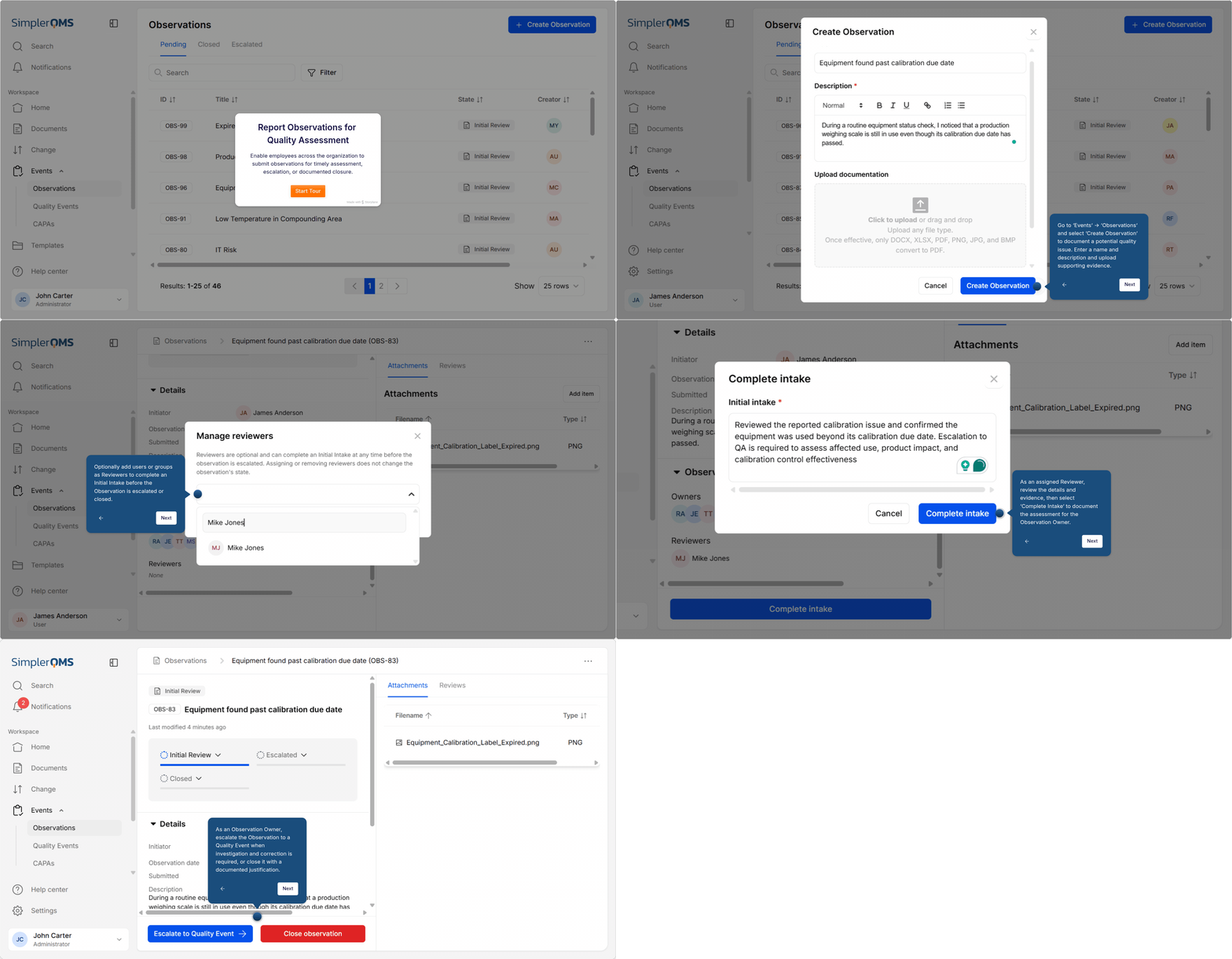
Explore how Observations work in SimplerQMS through a guided product tour.
What You Can Achieve with SimplerQMS
Built by life science experts to connect everyone to the quality process while keeping assessment and decision-making with QA.
“SimplerQMS makes things flow easier.”

Frictionless Reporting
Employees across the organization can report potential quality issues as Observations without needing to determine their final classification.
Controlled QA Triage
Observation Owners review each submission and decide whether to close them with justification or escalate them into the appropriate Quality Event.
End-to-End Traceability
Escalated Observations remain linked to the resulting Quality Event, preserving the history from initial reporting through investigation and follow-up.
Greater Efficiency and Visibility
Manage Observations alongside Quality Events and CAPAs in one integrated eQMS, helping teams reduce fragmented workflows and track status more easily.
How Different Roles Benefit from Observations in SimplerQMS
SimplerQMS gives teams across the organization a straightforward way to surface potential quality events while keeping assessment and escalation under controlled ownership.
Quality Assurance (QA)
Regulatory Affairs (RA)

Research and Development (R&D)
Manufacturing and Operations

Management and Executives

How Life Science Teams Use Observations in Practice
Life science organizations can use Observations as a simple entry point for capturing potential quality issues before QA determines whether Quality Event handling is required.
Capture Potential GMP Issues
With SimplerQMS:
A simpler front door for potential quality issues helps life science teams surface concerns earlier while keeping classification and escalation under controlled ownership.
Capture Potential Product or Process Issues
With SimplerQMS:
This gives teams a consistent way to capture potential issues while maintaining traceability when further quality or regulatory assessment is required.
Flag Sample and Process Concerns
With SimplerQMS:
Life science teams can raise potential issues without determining the final classification themselves, while QA retains control over whether further investigation is needed.
Improve Event Reporting Across Teams
With SimplerQMS:
This helps organizations create a more consistent reporting path across functions while maintaining clear ownership and traceability into downstream quality processes.
How SimplerQMS Supports These Use Cases
Explore the capabilities that help life science teams capture, review, and route Observations through a structured process with clear ownership and traceability.
Structured Workflows
Manage Observations through defined workflow states, from Initial Review to either Escalated or Closed, with clear actions for reviewers and Observation Owners.
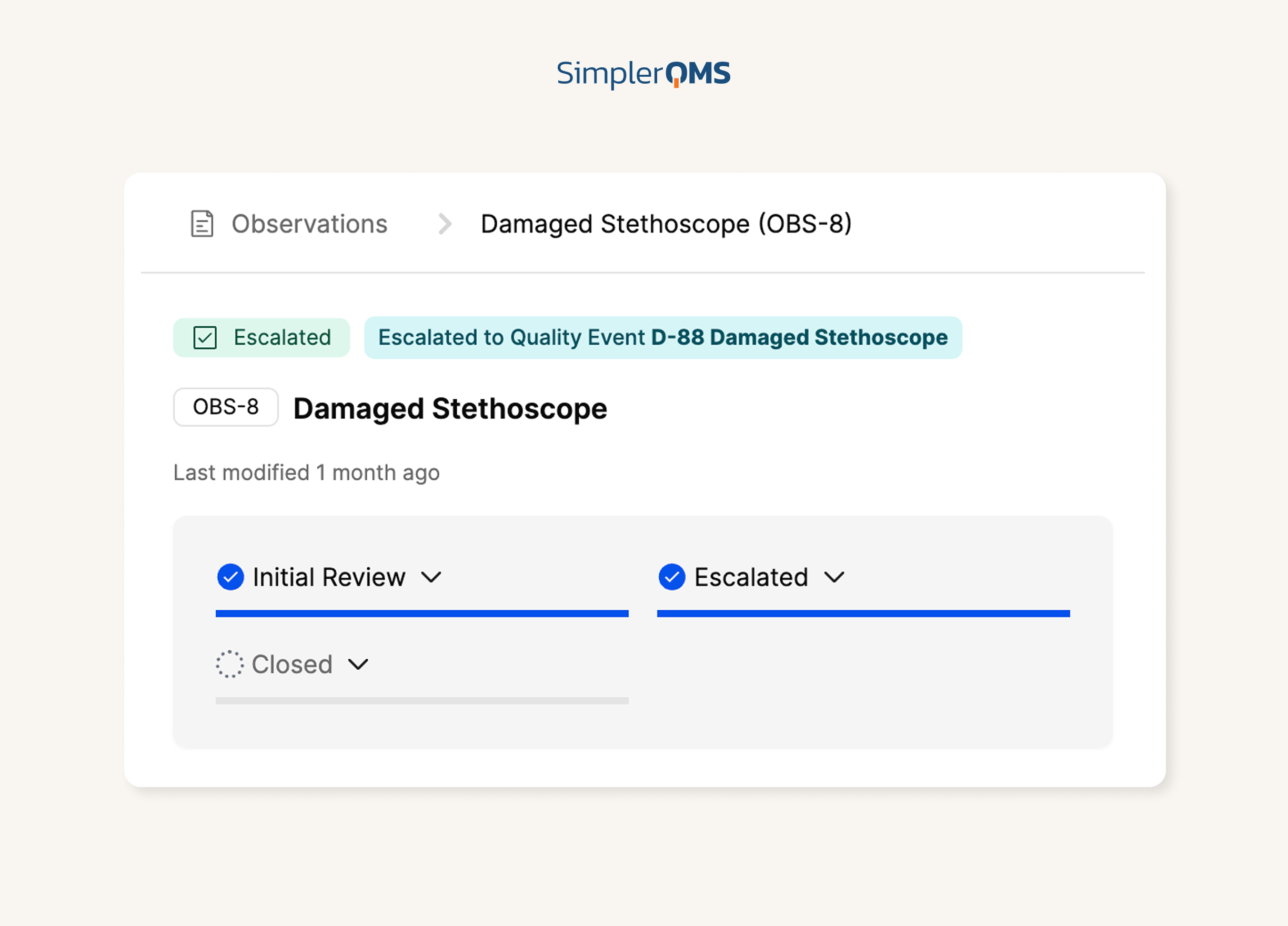
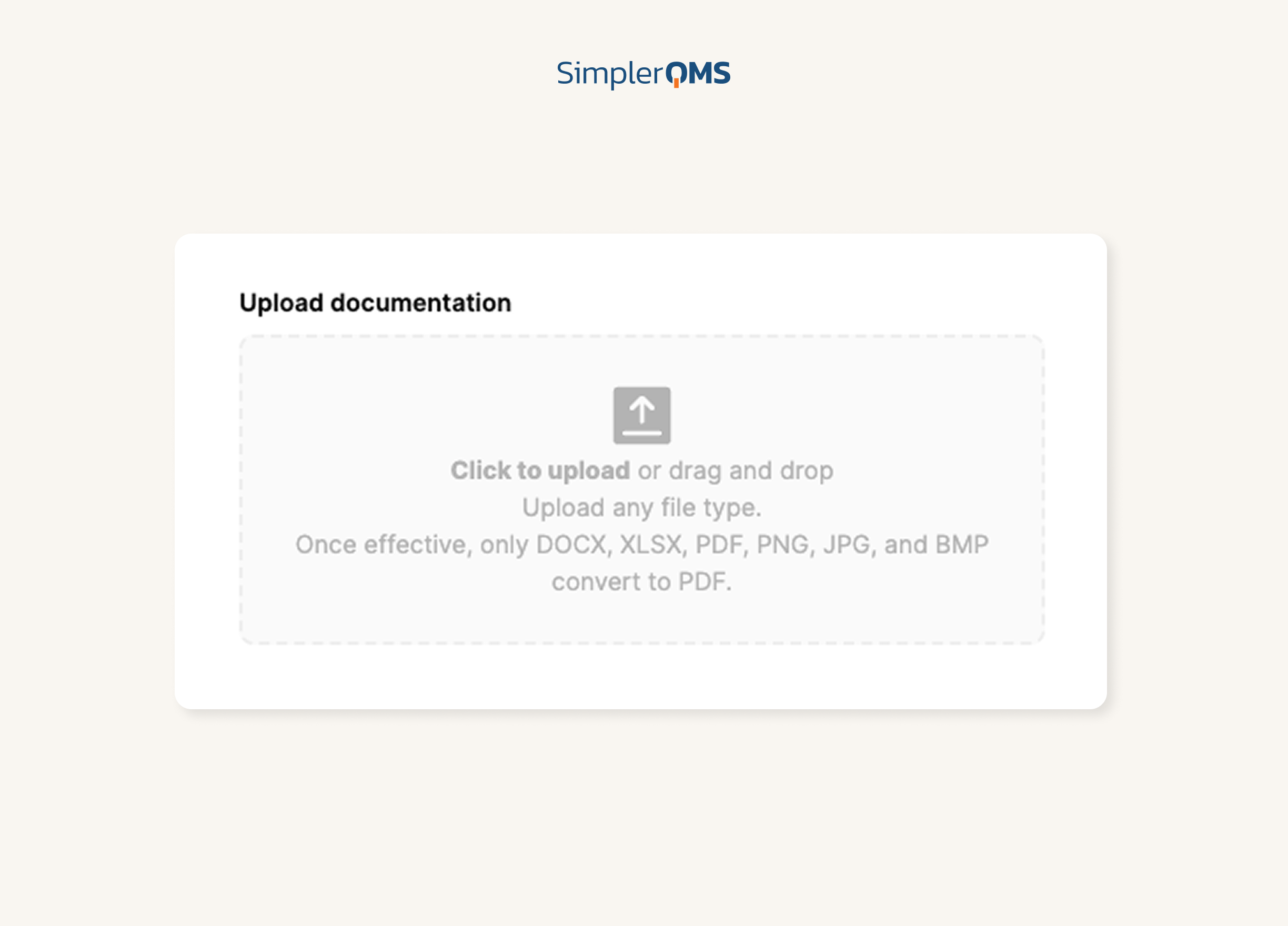
Supporting Documentation
Upload or drag and drop supporting documentation when creating an observation, helping provide additional context for review and assessment.
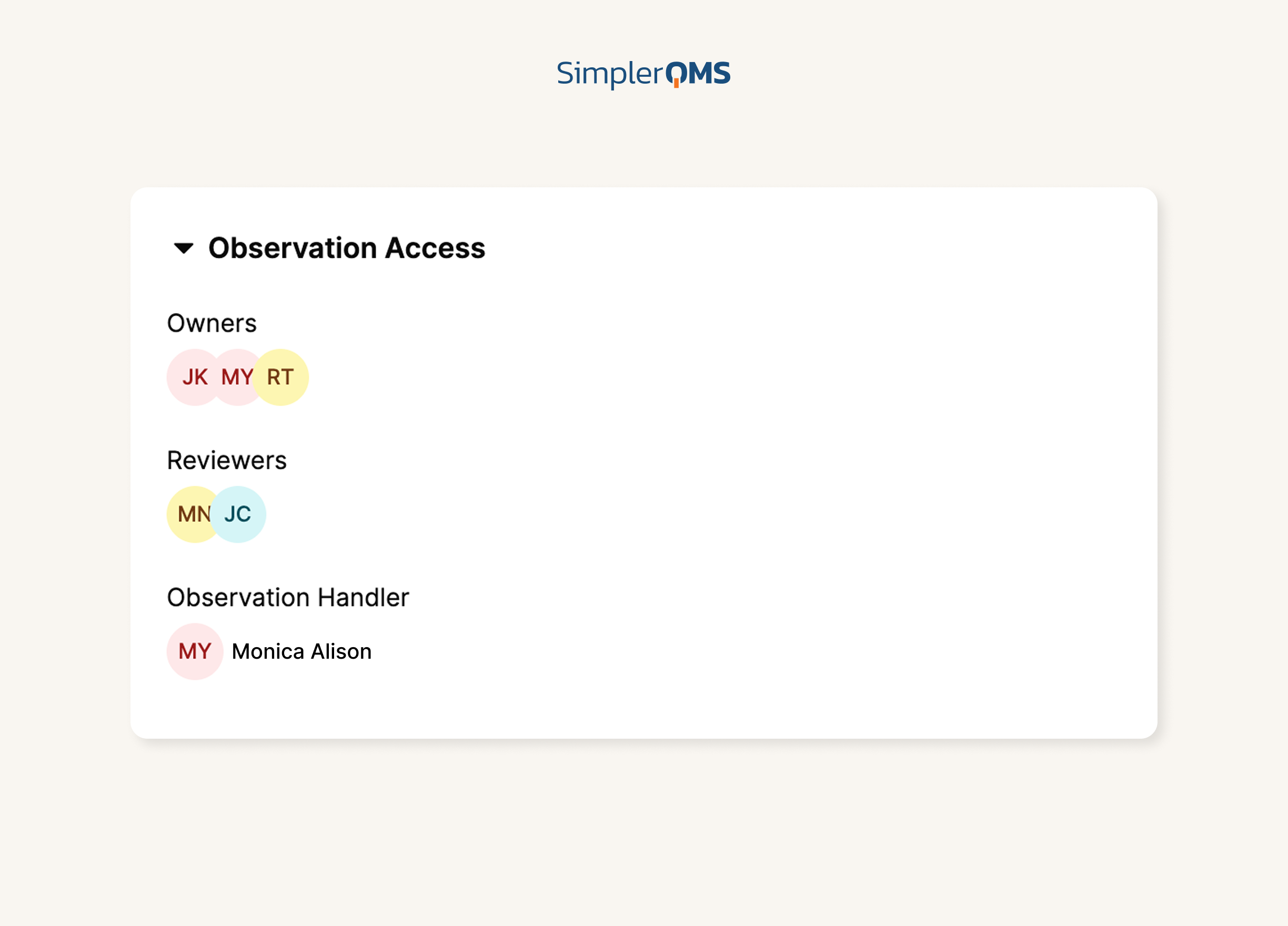
Role-Based Access Control
Assign Observation Owners who can investigate, escalate, or close Observations, and add Reviewers when additional input is needed.
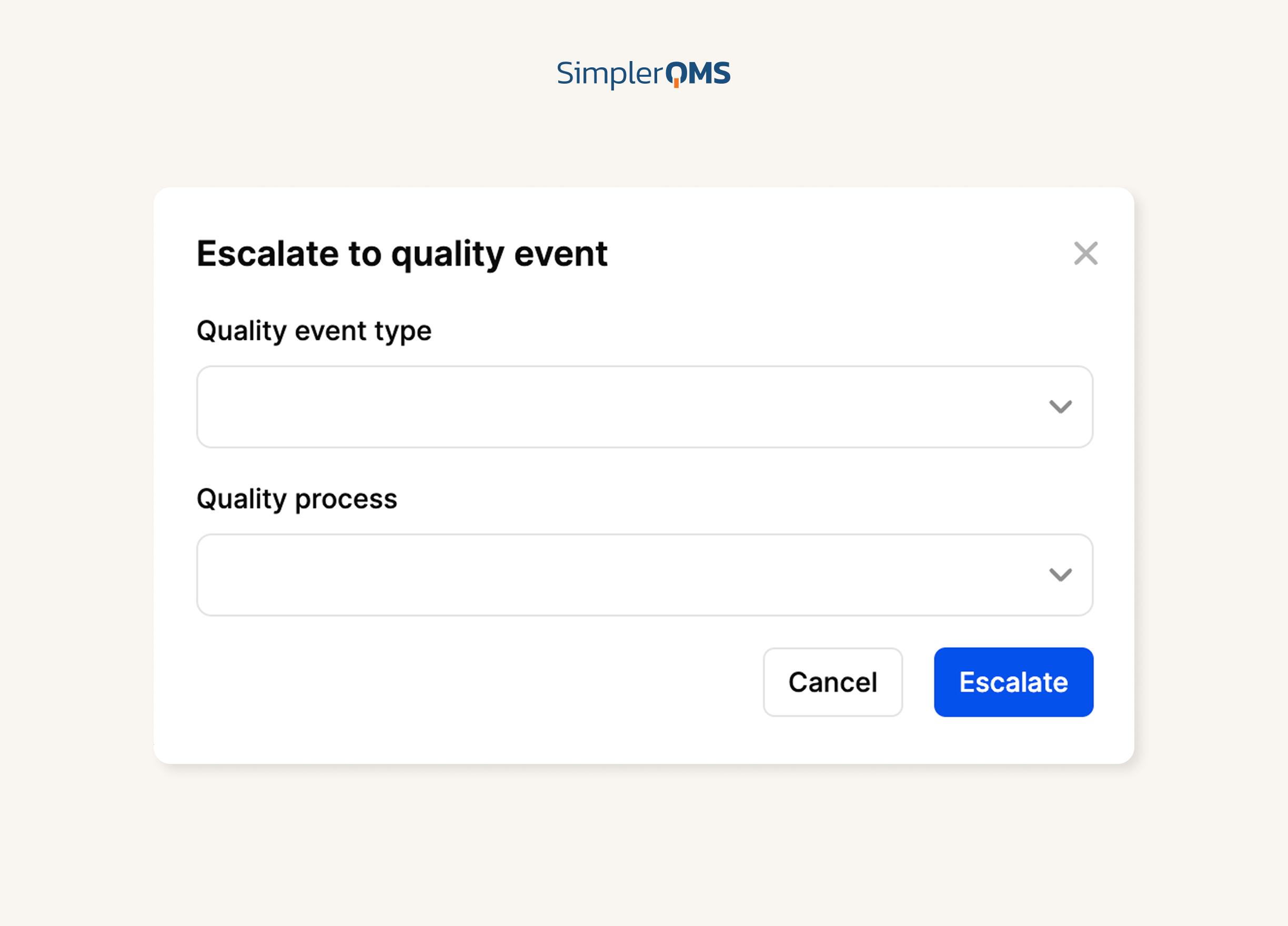
Escalation to Quality Events
Escalate an Observation into the appropriate Quality Event by selecting the relevant event type and quality process.
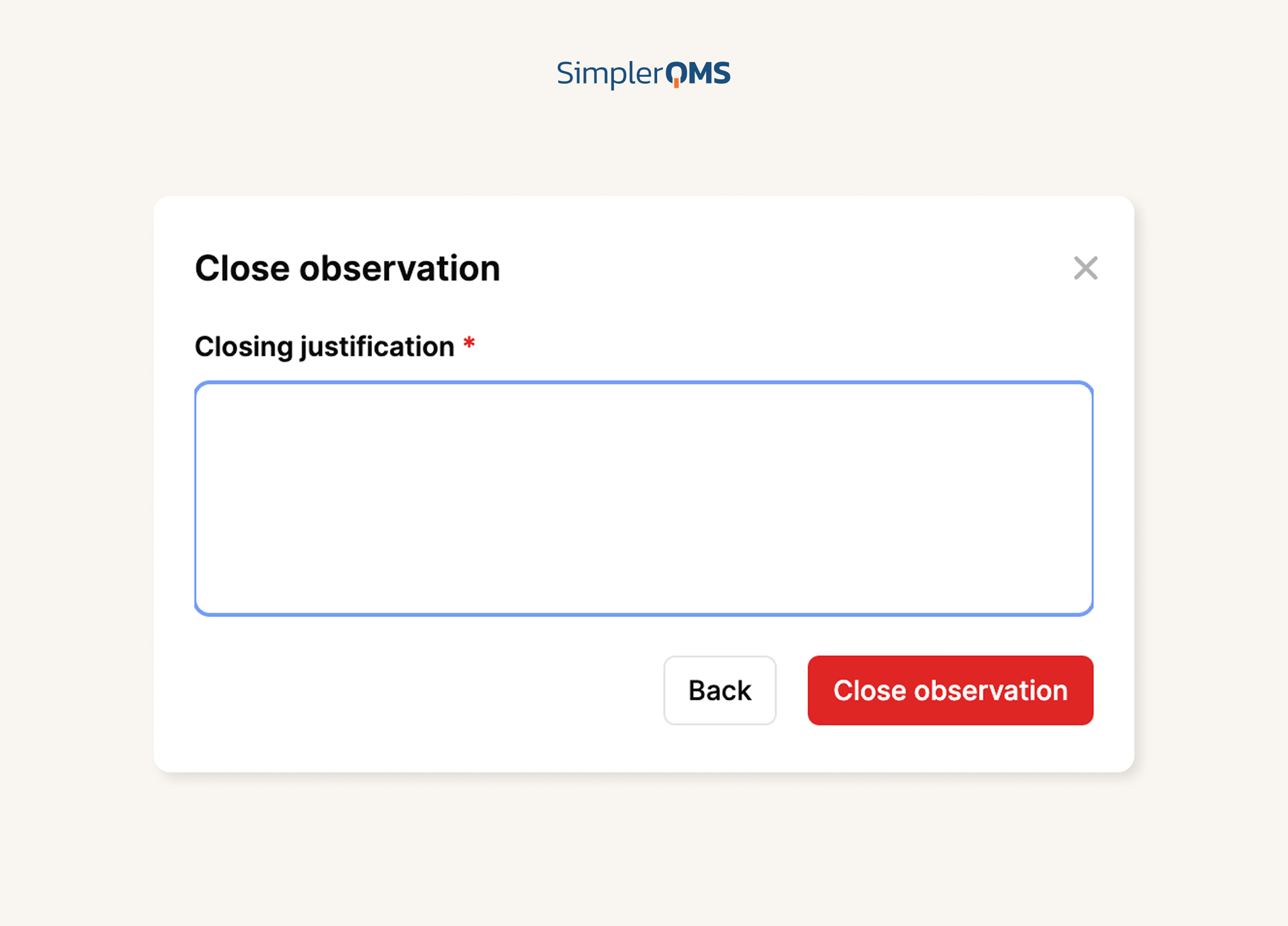
Closure with Justification
Close Observations that do not require formal Quality Event handling and document the reason using a closing justification.
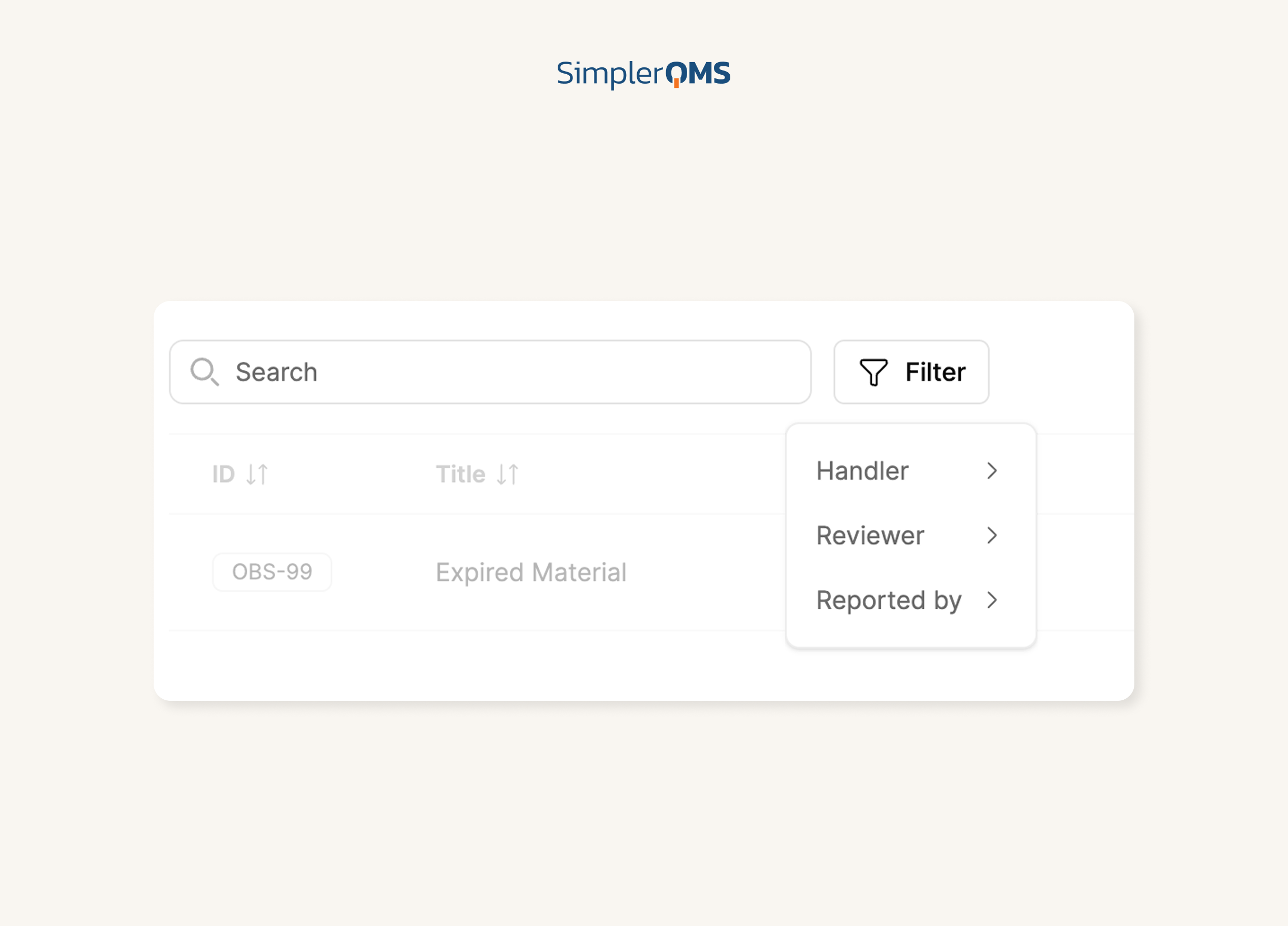
Search, Filtering, and Status Views
Find and monitor Observations using search and status-based views for Pending, Escalated, and Closed records, helping teams maintain visibility into what still requires attention.
Observations are Built into an Integrated eQMS
Observations are a part of SimplerQMS’s integrated eQMS for Life Science companies—connecting Observations to Quality Events in one system.
Explore our QMS Software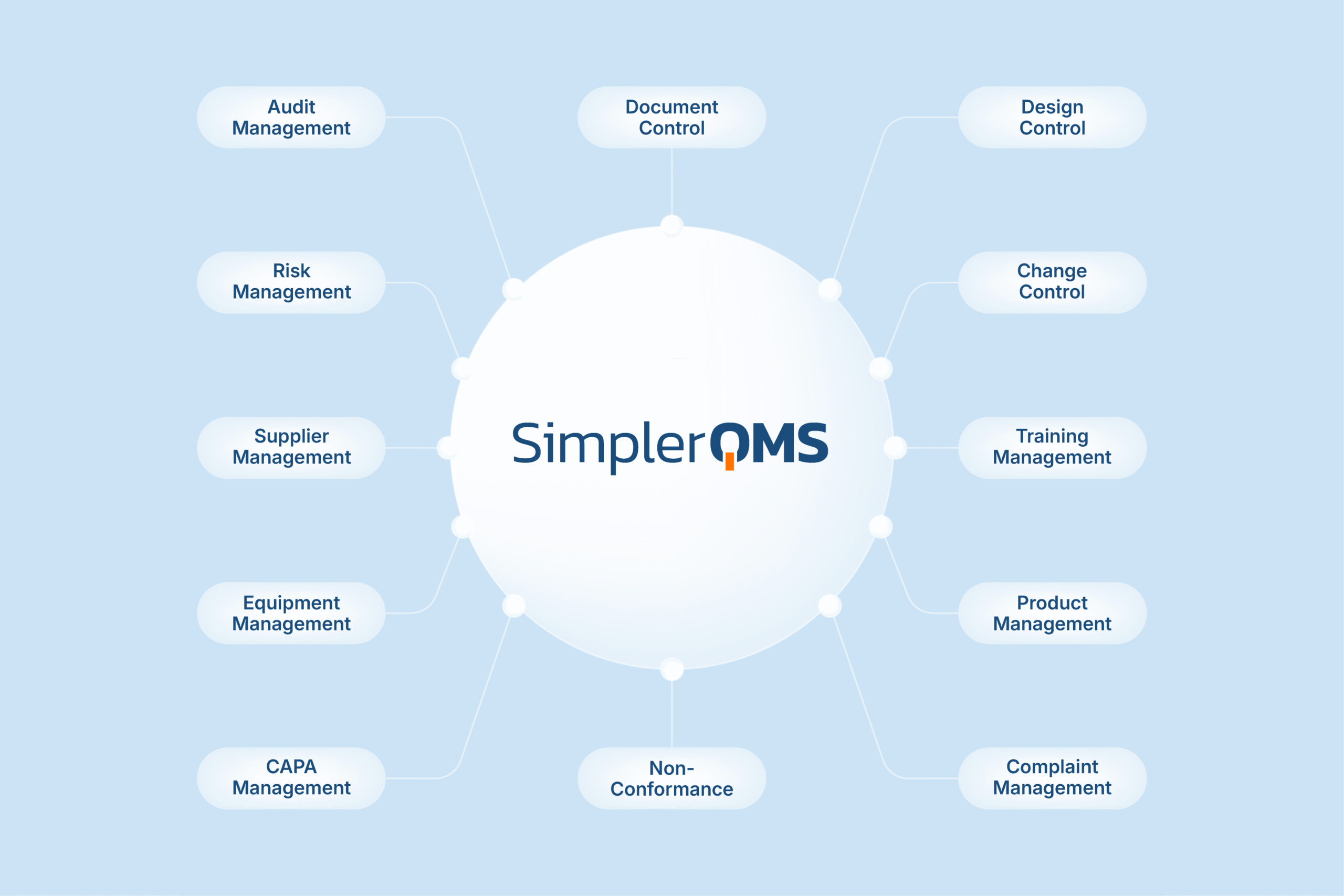
More Than Just Observations
Beyond Observations, SimplerQMS supports a wide range of interconnected quality processes within a fully integrated eQMS.


Supporting Compliance with Life Science Requirements
SimplerQMS enables organizations to implement Observations aligned with key life science requirements by helping organizations maintain traceability, streamlined resolution, and consistent processes.
SimplerQMS A/S is certified to ISO 13485:2016, and the SimplerQMS software is designed to support and align with the requirements of the ISO 13485 quality management system.
SimplerQMS A/S maintains information security controls aligned with ISO/IEC 27001:2022 across its organization and QMS software platform.
SimplerQMS complies with FDA 21 CFR Part 11.
SimplerQMS supports compliance with FDA 21 CFR Part 820.
SimplerQMS supports GMP requirements under FDA 21 CFR Part 211.
SimplerQMS supports compliance with FDA 21 CFR Part 212.
SimplerQMS support compliance with FDA 21 CFR Part 4.
SimplerQMS supports FDA Data Integrity Guidance (FDA-2018-D-3984) principles.
SimplerQMS supports adherence to CLIA.
SimplerQMS supports compliance with EudraLex Volume 4 GMP (Part 1 – Medicinal Products).
SimplerQMS supports compliance with EudraLex GMP Annex 11: Computerized Systems, Annex 16 QP certification for batch release, and Annex 19 reference/retention samples.
SimplerQMS supports compliance with EU MDR.
SimplerQMS supports compliance with EU IVDR.
SimplerQMS empowers life science organizations to meet UK MDR requirements.
SimplerQMS facilitates adherence to ISO 14971:2019.
SimplerQMS supports compliance with IEC 60601.
SimplerQMS supports alignment with IEC 62304.
SimplerQMS provides functionality aligned with ISO 1518:2022.
SimplerQMS supports compliance with ISO 16085:2021.
SimplerQMS aligns with pharmaceutical quality systems requirements per ICH Q10.
SimplerQMS supports risk management per ICH Q9.
SimplerQMS supports compliance per ICH Q8.
SimplerQMS supports compliance with PIC/S GMP (Part 1 – Medicinal Products).
SimplerQMS meets ISPE GAMP 5 guidelines, including Annex D1, Section 3 and Annex M3.
SimplerQMS supports compliance with ISO 9001:2015.
SimplerQMS applies ISO 90003:2018 best practices.
SimplerQMS follows ISO/IEC 27002:2022 guidance.
SimplerQMS supports alignment with GDPR (EU).
HIPAA
SimplerQMS supports alignment with HIPAA (US).
Hear From Our Happy Customers
Explore real-world case studies and customer reviews that show how Life Science teams use SimplerQMS.

‘’SimplerQMS has been an excellent solution for our team. The platform is intuitive and user-friendly, and the implementation process was incredibly smooth. We were able to go live in just 6 weeks…’’

“The ease of use, customizability, and the support given by the technical support team…Very fast in their response.”
‘’SimplerQMS is much better than our previous paper-based QMS system…SimplerQMS gave us excellent pricing, customer support for understanding how to use their system and set up our QMS and is easy to use.’’
“…I have consistently been impressed with its flexibility and range of features. These features have met all my needs in every aspect. The excellent support team further enhances the overall experience.”
“Amazing customer support and help. The system is clearly structured. After the introduction, it is easy to use.”
‘’User-friendly and simple to use. Easy to customize to fit your individual needs.’’

‘’Exceptional customer support! Compliant to 21 CFR Part 11 and ISO 13485:2015.’’
‘’…SimplerQMS offers the bare necessities and is perfect for our needs.’’
Learn More About Observations and Quality Events
Explore practical resources on how observations can lead into complaint, nonconformance, CAPA, and other quality event processes.
Deviation in the Pharmaceutical Industry: Definition, Types, and Management Process
DeviationsPharmaceutical


Frequently Asked Questions (FAQ) about Observations
Find answers to common questions about Observation and its role in life science quality management.
What Is an Observation in SimplerQMS?
An observation is the entry point to the events process in SimplerQMS. It gives employees a simple way to document a potential quality issue before its final classification is known, so QA can assess what happened and decide whether it should be closed or escalated to a Quality Event.
Why Use Observations Before Creating a Quality Event?
Observations separate reporting from formal classification. Employees can focus on describing what they saw, while configured Observation Inbox Owners determine whether the issue requires further handling as a deviation, non-conformance, complaint, or another Quality Event type.
Does every Observation become a Quality Event?
No. Each Observation is reviewed and assessed by the Observation Inbox Owners who documents and justifies the decision on the appropriate next step. The Observation may be closed if no further Quality Event handling is required, or escalated to the appropriate Quality Event when further investigation or follow-up is needed. Not every Observation requires escalation to a Quality Event or CAPA.
What Happens When an Observation is Escalated?
The Observation Owner selects the appropriate Quality Event type and quality process. SimplerQMS then creates a linked Quality Event in the Assessment state and records the original Observation as the originating record, helping preserve traceability from initial reporting onward.
Can Employees Attach Evidence to an Observation?
Yes. Supporting documentation can be uploaded or dragged and dropped when an observation is created, helping give reviewers and Observation Inbox Owners additional context when assessing the issue.
How Does SimplerQMS Help Teams Keep Track of Observations?
Observations are organized by status, including Pending, Escalated, and Closed, and users can search for specific records. This gives teams clearer visibility into which potential issues still need attention and which have already been resolved or moved into formal Quality Event handling.
How Do Observations Support Traceability?
When an observation is escalated, SimplerQMS creates a linked Quality Event and retains the connection to the originating Observation. This helps teams follow the record from the first report into downstream Quality Event processes instead of recreating the issue in a separate system.
How Do Observations Fit into Quality Events & CAPA?
Observations provide the entry point into the Quality Events process. A potential issue can be reported as an Observation, which is then evaluated and documented by the Observation Inbox Owner. If further investigation or correction is required, the Observation can be escalated to a Quality Event. Where corrective or preventive action is needed, the Quality Event can lead to CAPA, keeping related quality activities connected in one integrated eQMS.
See SimplerQMS in Action
See how SimplerQMS supports Observation and other interconnected quality processes in a single, integrated eQMS.
